 How-to
Best Perfume for Different Skin Types: A Practical Guide
Last Updated: November 24, 2026
Quick Summary
The best perfume for different skin types depends on how your skin holds scent: dry skin often does well with richer concentrations and base-heavy notes like amber, musk, and vanilla, while oily skin can amplify lighter citrus and floral blends. Skin chemistry, oils, moisture, pH, and temperature, changes how a fragrance develops, so match concentration and note family to your skin, then test on your wrist.
- Dry skin should choose woody, amber, musk, or vanilla bases in perfume oil or eau de parfum.
- Oily skin suits citrus, fresh, floral, and green notes in eau de toilette or light eau de parfum.
- Combination skin balances with a fresh or floral eau de parfum with soft musk or woody base.
- Test two fragrances at a time on inner forearms and judge base notes at 6 hours.
- Sensitive skin should patch test a new scent on the inner forearm for a full day.
Table of Contents
- What is the best perfume for different skin types?
- How skin chemistry perfume choices change your scent
- Perfume for dry skin: notes that last
- Perfume for oily skin: lighter notes, fewer sprays
- Combination skin: balance both sides
- What is the best perfume for different skin types?
- How to choose perfume for long lasting wear
- How to test a perfume on your own skin
- Separating skin-type effects from other variables
- Sensitive skin, allergies, and safe application
- Recommendations by concentration and format
- Personalized recommendations beyond skin type
- Evidence and limits of skin-type claims
- Frequently Asked Questions
What is the best perfume for different skin types?
The best perfume for different skin types depends on how your skin holds scent: dry skin often does well with richer concentrations and base-heavy notes like amber, musk, and vanilla, while oily skin can amplify lighter citrus and floral blends. Skin chemistry, oils, moisture, pH, and temperature, changes how a fragrance develops, so match concentration and note family to your skin, then test on your wrist.
How skin chemistry perfume choices change your scent
Skin chemistry changes your scent because oils and moisture speed up or slow how notes unfold. Dry skin burns through top notes and struggles to hold base notes, while oily skin stretches wear time and can feel heavier. For more, read how skin chemistry affects perfume scent.
Perfume for dry skin: notes that last
Perfume for dry skin should lean on base notes and richer concentrations, since dry skin has fewer oils to anchor fragrance. See long-lasting artisan fragrances and how long niche perfume lasts.
Perfume for oily skin: lighter notes, fewer sprays
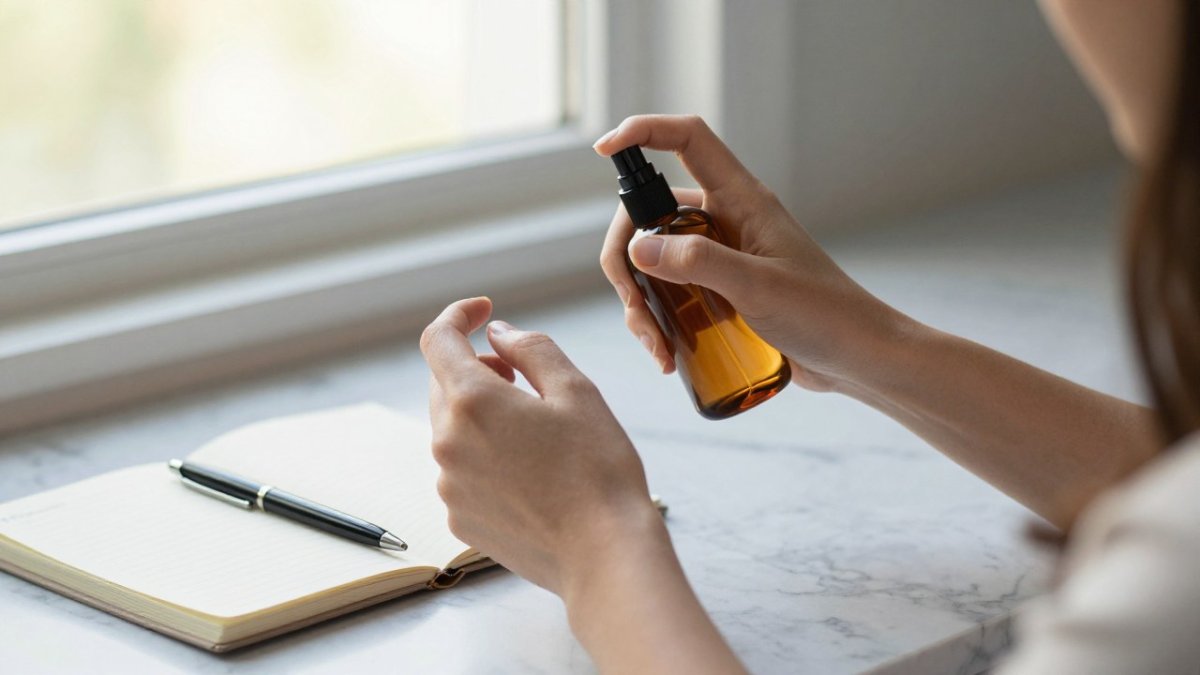
Perfume for oily skin works best with lighter, fresher notes and a restrained hand, because oily skin amplifies scent intensity and projection. Citrus, fresh, floral, and green notes stay crisp; oils help fragrance cling, so longevity is longer but sillage is stronger. One or two sprays is plenty; if you love amber or vanilla, choose a lighter concentration.
Combination skin: balance both sides
Combination skin needs a middle path, since oilier areas hold scent while drier areas lose it. A fresh or floral eau de parfum with a soft musk or woody base balances well. Test on more than one spot and compare how each develops.
What is the best perfume for different skin types?
The best perfume for different skin types comes down to matching concentration and note family to how your skin behaves. Here is a simple reference:
| Skin type | Best note families | Best concentration | Watch out for |
|---|---|---|---|
| Dry skin | Woody, amber, musk, vanilla | Perfume oil or eau de parfum | Fast fade; moisturize first |
| Oily skin | Citrus, fresh, floral, green | Eau de toilette or light eau de parfum | Over-spraying; strong projection |
| Combination skin | Fresh floral with musk or woody base | Eau de parfum | Uneven wear across zones |
| Sensitive skin | Simple, low-alcohol blends | Perfume oil | Irritation; patch test first |
For reactive skin, our guide to the best perfume for sensitive skin covers patch testing, and our guide on how to find your signature scent helps you narrow the field.
How to choose perfume for long lasting wear
Choosing perfume for long lasting wear means controlling the variables. Eau de parfum carries more fragrance oil than eau de toilette, while a perfume oil sits closest to the skin and releases slowly. Account for temperature, humidity, season, and amount applied; apply to hydrated skin, avoid rubbing your wrists, and test in real conditions.
How to test a perfume on your own skin
Testing a perfume on your own skin is the only reliable way to know how it will wear. Apply unscented moisturizer to both inner forearms, spray fragrance A on one and B on the other, and do not rub. Note the scent at 15 minutes, 2 hours, and 6 hours, judge the base notes at 6 hours, and get a second opinion.
Separating skin-type effects from other variables
Skin type is only one factor. Before concluding a perfume "does not work," check how much you sprayed, whether you moisturized, the season and humidity, and bottle storage. Fragrance concentration and format often explain more than skin type; moving up in concentration is usually a bigger lever than switching note families.
Sensitive skin, allergies, and safe application
Sensitive skin needs caution, because fragrance is a common source of contact reactions. Apply a small amount to your inner forearm, wait a full day, and watch for redness, itching, or swelling. Choose simpler, lower-alcohol blends and perfume oils, spray onto clothing or hair rather than broken or freshly shaved skin, keep fragrance away from the face and eyes, and patch test every new bottle.
Recommendations by concentration and format
Concentration and format change how a perfume behaves on every skin type:
| Format | Relative strength | Best for | Trade-off |
|---|---|---|---|
| Eau de toilette | Light | Oily skin, daytime, warm weather | Fades faster |
| Eau de parfum | Medium to strong | Dry and combination skin, evening | Can feel heavy if over-sprayed |
| Perfume oil | Close to skin, slow release | Dry and sensitive skin | Less projection |
| Body mist | Very light | Refreshing, layering | Short wear time |
Best for: dry skin wanting staying power, an eau de parfum or perfume oil. Skip if: you have oily skin and want something subtle, where a light eau de toilette serves you better.
Personalized recommendations beyond skin type
Skin type is a starting point, not a verdict. Your personal preference, the season, your environment, and even diet and stress shape how a fragrance reads on you. Use skin type to narrow the field, then let your own nose make the final call.
Evidence and limits of skin-type claims
Skin-type guidance is a set of tendencies, not hard laws. Much of what circulates online is based on how oils and moisture generally interact with scent rather than on formal studies.
Finding a fragrance that works with your skin takes a little testing, and that is where we can help. Atlanta Signature Fragrance Collection handcrafts unisex, niche perfumes.
Frequently Asked Questions
How does skin type affect perfume longevity?
Dry skin tends to release fragrance faster because it lacks natural oils to hold scent molecules, so you may need to reapply sooner. Oily skin holds fragrance longer but can amplify certain notes. Combination skin falls in between. Using an unscented moisturizer before applying perfume can help extend wear on dry skin, while oily skin may need lighter concentrations to avoid overwhelming projection.
How do I know which perfume suits my skin?
Test on your own skin, not paper. Apply a small amount to your wrist or inner elbow and wait at least 30 minutes to see how top notes settle into middle and base notes. Check again after 4-6 hours to judge longevity. Try one fragrance at a time, and avoid testing more than two in a day to prevent scent fatigue. Personal preference and how the scent evolves on you matter more than general skin-type rules.
What is the 30/50/20 rule for perfume?
The 30/50/20 rule is a rough guide to fragrance composition: about 30% top notes, 50% middle notes, and 20% base notes. It helps explain why a perfume smells different over time. Top notes fade first, middle notes form the core, and base notes linger longest. This balance affects how a fragrance performs on your skin type, but actual wear depends on concentration, application, and your skin chemistry.