 How-to
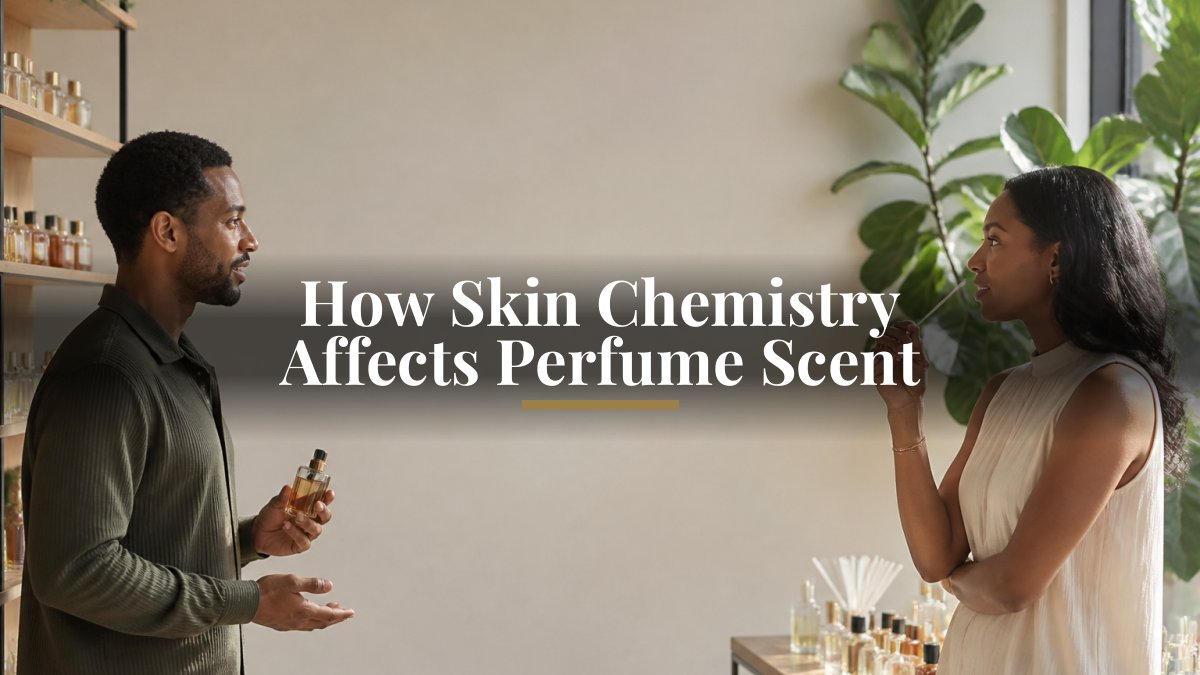
How Skin Chemistry Affects Perfume Scent
Table of Contents
- Why the Same Perfume Smells Different on Different People
- How to Test Perfume on Skin for Accurate Results
- Does Skin Type Affect Perfume Longevity
- Why Perfume Smells Different on Skin Than on Paper
- Perfume for Sensitive Skin: Choosing Fragrances That Work
- Body Temperature, Pulse Points, and Scent Development
- Controlling Variables: Climate, Clothing, and Application Location
- Frequently Asked Questions
Last Updated: October 14, 2026
Why the Same Perfume Smells Different on Different People
The same fragrance can smell completely different from one person to the next. A scent that works beautifully on your coworker smells flat on you. This isn't a coincidence, it's how skin chemistry affects perfume scent. But the popular explanation for why is often oversimplified, so it helps to separate what's well established from what's commonly repeated.
What Skin pH Actually Does (and Doesn't Do)
Your skin's surface is naturally acidic, typically around pH 4.5 to 5.5, thanks to the acid mantle, a mix of sebum, sweat, and fatty acids that defends against microbes and supports barrier function.
The popular claim is that this pH "breaks down" fragrance molecules at different rates on different people. That's a reasonable hypothesis, but the direct evidence is thinner than most articles suggest:
- Skin surface pH varies less between people than the internet implies. Most healthy adults sit within a fairly narrow acidic band. The dramatic "acidic vs. alkaline skin" framing you see online is not well supported.
- Fragrance molecules are not uniformly pH-sensitive. Some aroma compounds, certain esters, for example, do hydrolyze faster in acidic or basic conditions. Many others are largely unaffected by the small pH differences between two healthy people.
- Other variables usually dominate. Moisture level, sebum content, body temperature, application amount, and the fragrance's own concentration typically move the needle more than a few tenths of a pH point.
So pH is a real factor, but one input among several, not a master switch. If a fragrance smells different on you than on a friend, pH is rarely the whole story.
Natural Skin Oils and Fragrance Retention
Sebum, the oil your skin produces, is a more reliable explanation for why fragrance behaves differently across people. Fragrance molecules are largely lipophilic (oil-loving), so they dissolve into sebum rather than sitting on dry skin.
More sebum generally means:
- Slower evaporation. Oily skin holds volatile top notes longer, which can make a fragrance feel richer and less sharp in the opening.
- Longer overall wear. Base notes in particular cling to oils, so dry skin often loses a fragrance hours before oily skin does.
- Different projection. Oil slows the release of aroma compounds, so the scent can feel closer to the skin but last longer, rather than projecting loudly and fading fast.
Moisture matters too: hydrated skin retains fragrance better than dehydrated skin. This is why applying an unscented moisturizer before perfume is one of the few "tricks" with a plausible mechanism, you're giving the fragrance more to bind to.
The Factors That Usually Matter More Than pH
If you want to understand why a perfume behaves differently on you, these are the levers worth watching, roughly in order of how much they matter:
- Fragrance concentration and formulation, an eau de parfum and an eau de toilette of the "same" scent can wear completely differently.
- Application amount and location, two sprays on the wrist vs. four on the chest is a bigger variable than most people realize.
- Skin moisture and sebum, dry skin loses fragrance faster; oily skin holds it longer.
- Body temperature, warmer skin volatilizes fragrance faster, boosting projection and shortening wear.
- Ambient humidity and temperature, a fragrance worn in a dry, air-conditioned office behaves differently than the same fragrance on a humid summer evening.
- Skin pH, a real but modest factor, and one whose effect is often overstated.
How to Test Perfume on Skin for Accurate Results
Testing perfume properly requires a method that removes guesswork. Most people spray and sniff immediately, which tells you almost nothing, and a single sniff on a single day tells you even less, because skin chemistry, ambient conditions, and even your sense of smell shift daily.
The Blotter Test vs. Skin Test
A blotter test uses paper strips to evaluate fragrance without skin involvement, showing the pure scent composition, what the perfumer intended.
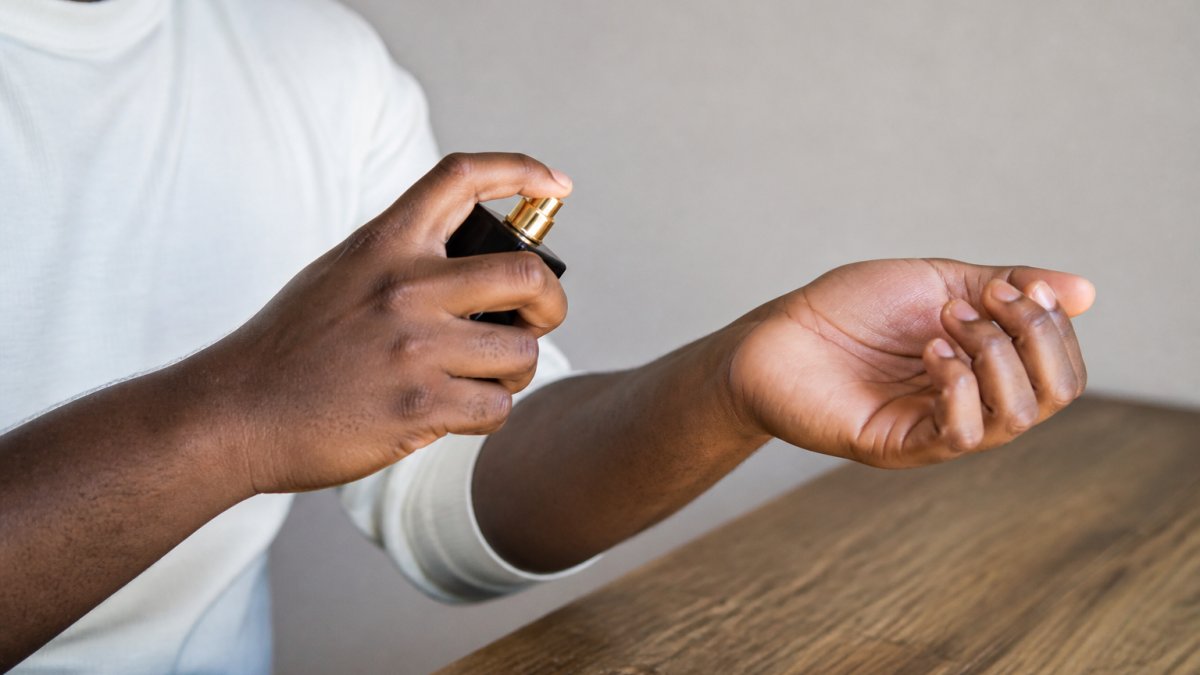
A skin test applies fragrance directly to your body, revealing the real story: your skin's moisture, sebum, temperature, and pH all influence what you smell.
The best approach uses both. Start with a blotter test to understand the fragrance's structure and quality.
A Controlled Multi-Day Skin Test Protocol
A single 24-hour test can't tell you whether what you smelled was the fragrance or just an off day. A repeatable protocol:
Setup (do this once):
- Choose a consistent application site, the inner forearm is better than the wrist because it's less exposed to friction and washing.
- Use the same number of sprays every time. Two sprays is a reasonable standard; note the count.
- Apply to clean, dry skin. Skip lotion on test days unless you're specifically testing how lotion changes performance.
The test cycle (repeat on 3 separate days):
Scents of Atlanta Collection →
| Time after spray | What to note |
|---|---|
| 15 minutes | Opening impression, sharp, bright, harsh, or smooth? |
| 1 hour | Early heart, has it softened or shifted? |
| 3 hours | Mid-wear, still projecting, or close to skin? |
| 6 hours | Late wear, noticeable at arm's length? |
| 10-12 hours | Endurance, any trace left, or fully gone? |
Record each day separately. If the fragrance behaves roughly the same all three days, you have a reliable read. If it swings wildly, something else is at play, humidity, hormones, diet, or application amount.
Confounders That Fool Almost Everyone
Even a careful test can mislead you if you don't account for these:
- Reformulations. Fragrance houses quietly change formulas. A scent you loved five years ago may not be the same juice today. If a new bottle smells different from your memory, it may not be your skin at all.
- Batch variation. Natural raw materials vary harvest to harvest, and even synthetic-heavy formulas can shift slightly between production runs. Two bottles of the "same" fragrance can differ.
- Concentration and storage. Heat and light degrade fragrance. A bottle that sat on a sunny windowsill for a year will smell different from a fresh one, regardless of your skin.
Separating Skin Effects From Everything Else
To know whether a difference is really your skin, run a simple control: spray the same fragrance on a blotter and on your skin simultaneously, and smell both at each interval.
This is also the honest answer to "will this perfume smell good on me?" No one can predict it from your skin type or pH alone.
Learn more about fragrance chemistry and skin interactions from dermatology resources
Does Skin Type Affect Perfume Longevity
Your skin type determines how long a fragrance stays noticeable. Different skin types interact with fragrance molecules in measurably different ways.
Oily Skin and Fragrance Wear Time
Oily skin is a fragrance lover's advantage: natural oils trap fragrance molecules and hold them close, so the scent lasts longer and projects further. A 2-hour fragrance on dry skin might last 6 hours on oily skin.
The tradeoff is intensity: oily skin can amplify fragrance to the point of being overwhelming. Test before committing to a full bottle.
Dry Skin and Scent Projection
Dry skin struggles to hold fragrance. Fragrance molecules evaporate faster because there's less oil to anchor them. The scent fades quickly. It doesn't project as far.
If you have dry skin, moisturize before applying fragrance. Apply fragrance to pulse points where your body generates heat. Consider higher fragrance concentrations, eau de parfum instead of eau de toilette. These adjustments help dry skin retain scent longer.
Why Perfume Smells Different on Skin Than on Paper
Paper is inert and doesn't change the fragrance; your skin is alive and reactive, transforming fragrance through chemistry.
When fragrance touches your skin, several things happen: body heat warms the molecules, making them evaporate faster and project further; skin pH alters certain aromatic compounds; natural oils blend with the fragrance, creating new scent combinations; and your skin microbiome can influence how you perceive the scent.
This is why a fragrance that smells amazing on a blotter can feel different on your body. You're not imagining it. The fragrance is literally different because your skin has changed it.
Perfume for Sensitive Skin: Choosing Fragrances That Work
Sensitive skin reacts to fragrance differently, redness, itching, irritation, or a scent that smells too intense. Either way, selection matters more for sensitive skin.
Scents of Atlanta Collection →
Identifying Fragrance Sensitivities
Common irritants include alcohol content, synthetic musks, and certain essential oils. If a fragrance makes your skin red or itchy, you've identified a sensitivity; if it smells overwhelming or gives you a headache, your skin chemistry might be rejecting it.
Keep a simple log: fragrance name, application location, and your skin's reaction. After testing several, patterns emerge, you'll notice which ingredients cause problems and which scent families work for you.
Fragrance Concentration and Skin Reaction
Higher concentrations contain more aromatic compounds, meaning more potential irritants. Eau de cologne might feel better on sensitive skin than eau de parfum.
Start with lower concentrations, test in a small area, and wait 24 hours to see if irritation develops before applying to your full body. This prevents wasting money on fragrances your skin rejects.
Body Temperature, Pulse Points, and Scent Development
Your body temperature directly influences fragrance performance. Warmer skin evaporates fragrance faster. Cooler skin holds it longer. This is why pulse points matter.
Pulse points are areas where your body generates heat: wrists, inner elbows, behind ears, and the base of your throat.
If you want fragrance to last all day, apply to cooler areas like your chest or behind your knees.
Controlling Variables: Climate, Clothing, and Application Location
Your environment influences how fragrance performs. Hot, humid climates accelerate evaporation. Cold, dry climates slow it down.
Clothing affects projection too: fragrance under clothing lasts longer because it's protected from air exposure, while fragrance on exposed skin projects immediately but fades faster.
Application location matters most. Spray fragrance on skin, never on clothing alone. Skin chemistry is what makes fragrance unique to you.
Understanding how skin chemistry affects perfume scent transforms your fragrance experience. At Atlanta Signature Fragrance Collection, we craft handcrafted fragrances designed to offer a unique and memorable scent experience. Test our collection on your skin, follow the 24-hour testing method, and discover your signature scent. Learn more about fragrance chemistry and skin interactions from dermatology resources to deepen your understanding of how your skin influences scent perception.
Frequently Asked Questions
Why does the same perfume smell different on different people?
Skin chemistry, including pH levels, natural oils, body temperature, and moisture content, interacts with fragrance molecules differently on each person. Your skin's acidity can break down certain scent compounds faster, while natural oils enhance fragrance longevity. Body temperature affects how quickly fragrance evaporates. These individual variations mean a perfume that projects beautifully on one person may smell subdued or altered on another.
How can I test a perfume on my skin to see if it works for me?
Apply a small amount to your inner wrist or pulse point and wait 24 hours before deciding. This allows the fragrance to develop through all scent notes (top, middle, and base) and interact fully with your skin chemistry. Avoid smelling it immediately; instead, check it after 5 minutes, 2 hours, and 8 hours to observe how it evolves. This controlled perfume testing method helps you understand how the fragrance evolves on your skin.
Can dry skin affect how long perfume lasts?
Yes. Dry skin has lower natural oil content, which means fragrance molecules evaporate more quickly and scent projection is typically weaker. Hydrated, oily skin retains fragrance longer because natural oils hold fragrance molecules closer to the skin surface. If you have dry skin, apply perfume to areas with more natural oil production (pulse points like the neck or inner elbows) and consider using a fragrance primer or moisturizer beforehand to extend longevity.
What should I do if a fragrance irritates my sensitive skin?
Stop using it immediately and rinse the area with cool water. Sensitive skin reactions may be caused by specific fragrance compounds, high alcohol content, or fragrance concentration. When selecting perfume for sensitive skin, start with lower concentrations (eau de cologne rather than parfum), patch test on a small area first, and choose fragrances with fewer synthetic ingredients. If irritation persists, consult a dermatologist.