 How-to
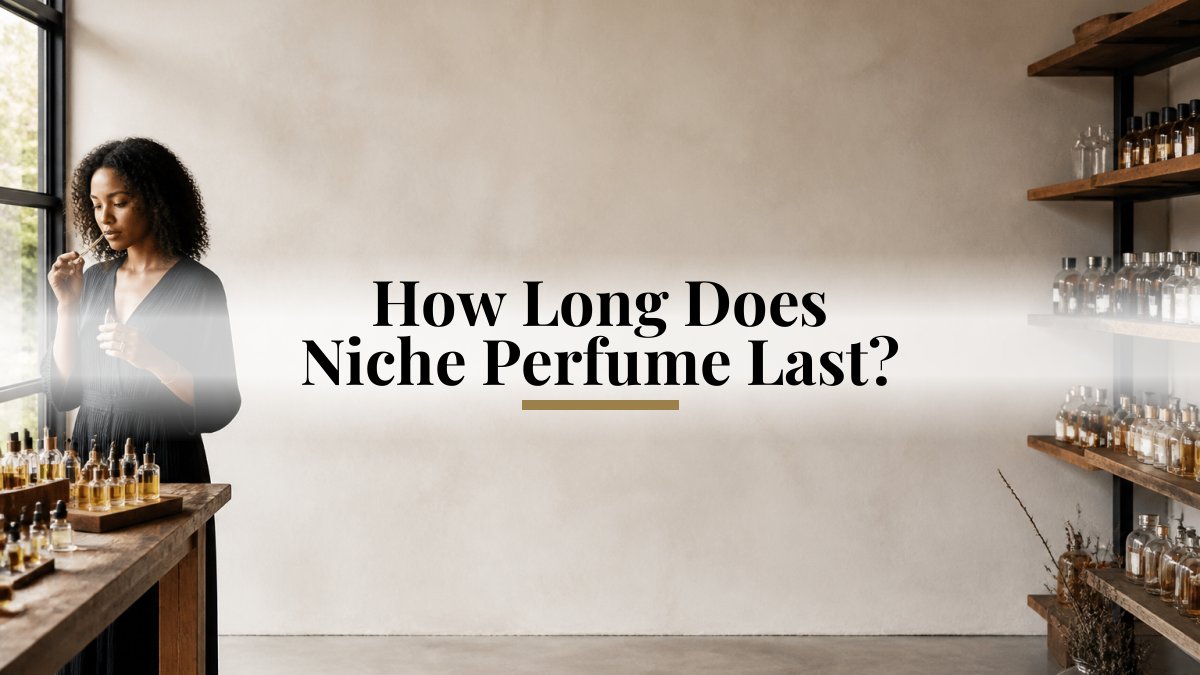
How Long Does Niche Perfume Last?
Last Updated: October 26, 2026
Quick Summary
Niche perfume last typically 4 to 8 hours on skin, though some formulations extend to 12 hours or longer depending on concentration, ingredients, and individual factors. Wear time depends on fragrance concentration, skin chemistry, and composition rather than brand prestige.
- Eau de toilette lasts 3 to 5 hours, eau de parfum 5 to 8 hours, and parfum or extrait 8 to 12+ hours.
- Moisturized skin extends fragrance wear significantly more than dry skin.
- Niche perfumes do not automatically last longer than designer fragrances; concentration and structure matter more than brand category.
- Projection fades after 1-2 hours even when fragrance remains detectable on skin for 8+ hours.
- Proper storage in cool, dark conditions preserves unopened bottles for 3-5 years and opened bottles for 1-3 years.
Table of Contents
- How Long Does Niche Perfume Last on Skin
- Do Niche Perfumes Last Longer Than Designer Perfumes
- Factors That Affect Niche Perfume Longevity
- How to Make Perfume Last Longer
- Does Perfume Expire
- Projection, Sillage, and What You Actually Smell
- Finding Your Signature Niche Fragrance
- Frequently Asked Questions
How Long Does Niche Perfume Last on Skin
Niche perfume typically lasts 4 to 8 hours on skin, though some formulations extend to 12 hours or longer depending on concentration, ingredients, and individual factors. Niche fragrances aren't automatically longer-lasting just because they cost more or come from smaller artisanal makers.
A handcrafted niche perfume might project beautifully for two hours, then settle into a subtle skin scent that lingers but becomes undetectable to others, not failure, just the natural progression of fragrance.
The key variable isn't prestige, it's concentration.
What matters most: skin chemistry, application technique, and composition. A poorly hydrated person wearing a delicate floral might notice it gone after 3 hours; the same person with moisturized skin wearing a woody, base-heavy scent could enjoy 10+ hours.
Do Niche Perfumes Last Longer Than Designer Perfumes
Niche perfumes do not automatically last longer than designer fragrances. Wear time depends on concentration, fragrance structure, and how the scent interacts with your skin, not on whether the maker is artisanal or mainstream. A designer eau de parfum will typically outlast a niche eau de toilette, and a niche extrait will typically outlast a designer eau de parfum.
What niche makers often do differently is choose a target wear time and build the formula around it. A niche house may load a woody-amber base with resins and musks to hold for 10 or more hours, while a designer release may be tuned for a bright opening that fades into a soft skin scent after 3 to 4 hours.
A Controlled Way to Compare Niche and Designer Fragrances
Most comparisons fail because people test under different conditions: one on a hot day, one after a shower, one on clothing, one on dry skin. To compare fairly, control these variables:
- Same skin site and same prep. Apply each fragrance to the same spot (for example, the inner forearm) on clean, unscented, similarly moisturized skin.
- Same amount. Use the same number of sprays or the same dab volume for each fragrance. Two sprays of one and five of another is not a comparison.
- Same day conditions. Test on days with similar temperature and activity level, or test both fragrances on the same day on opposite arms.
- Same detection standard. Decide in advance what counts as "still detectable" and who is checking: you, sniffing close to the skin, or another person at conversational distance.
- Same evaluation times. Check at 1, 2, 4, 6, 8, and 12 hours and record what you detect at each point.
A simple test log makes the comparison repeatable: record concentration, sprays, application site, time, temperature and humidity, and detection notes at each checkpoint. After three or four side-by-side tests, patterns emerge that anecdotes cannot provide.
What the Comparison Usually Shows
When fragrances are tested under matched conditions, concentration tends to explain more of the difference than brand category. Eau de toilette formulas typically register as detectable for roughly 3 to 5 hours on skin, eau de parfum for 5 to 8 hours, and parfum or extrait for 8 to 12 hours or more, with wide variation by composition. A delicate citrus-forward niche eau de parfum can fade faster than a resinous designer eau de parfum. The label category sets an expectation; the formula and your skin set the result.
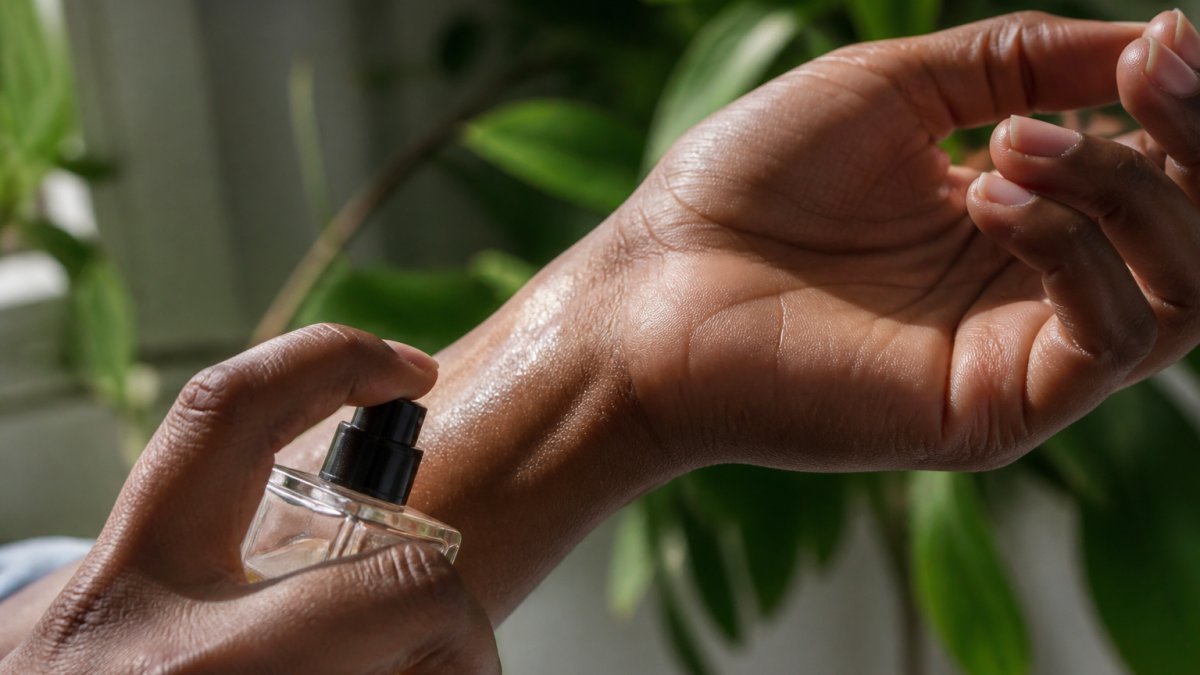
Factors That Affect Niche Perfume Longevity
Longevity is the product of four interacting variables: concentration and structure, skin condition, environment, and application. No single factor predicts wear time, which is why two people wearing the same niche fragrance can report very different results.
Fragrance Concentration and Composition
Concentration is the clearest starting point: eau de toilette carries roughly 5 to 9 percent fragrance oils, eau de parfum 15 to 20 percent, and parfum or extrait 20 percent or more. Higher concentration generally means slower evaporation, but it doesn't guarantee performance, a high-concentration citrus formula can fade quickly, while a lower-concentration resin-and-musk formula can hold for hours.
Structure matters as much as percentage. Learn what makes a perfume high-quality to better understand how composition affects longevity. Citrus and light floral top notes burn off first; rose, jasmine, and spice middle notes emerge next; amber, musk, sandalwood, vetiver, and oud base notes evaporate slowly and create the long tail.
Skin Type, Hydration, and Natural Oils
Skin chemistry changes how a fragrance unfolds. Oily skin holds fragrance longer because the oils give molecules something to bind to; dry skin releases it faster. Hydration matters more than skin type: applying to moisturized skin is one of the most reliable ways to extend wear, often adding a few hours.
Body temperature also shapes diffusion. Warm pulse points like wrists, neck, and behind the ears release fragrance fast, projecting strongly early then fading; cooler sites like the chest or inner elbows release it more slowly and steadily.
Temperature, Humidity, and Environment
Heat accelerates evaporation, so a fragrance fades faster in summer than in cool weather. High humidity can help it cling, but intense heat usually overrides that benefit, and wind speeds up loss, a windy day outdoors produces shorter wear than a day indoors in still air.
Scents of Atlanta Collection →
Storage affects the fragrance before it touches your skin. Heat, light, and air degrade molecules over time, reducing potency; a bottle kept in a cool, dark closet maintains performance far longer than one on a sunny bathroom shelf.
Skin Versus Fabric Performance
Fabric changes the equation. Fragrance clings to fabric longer than skin, and natural fibers like cotton and wool hold scent well, so a light spray on clothing can extend perceived wear by hours. But resin- or oil-heavy fragrances can stain silk or light-colored synthetics, test on an inconspicuous area first and avoid delicate or dry-clean-only materials.
Sensitive skin deserves the same caution. Applying fragrance to broken, irritated, or freshly shaved skin increases the chance of irritation; spraying onto clothing or a scent strip is safer.
How to Test Wear Time and Troubleshoot
A repeatable test removes guesswork. Apply a known number of sprays to a defined skin site on clean, moisturized skin, then check at 1, 2, 4, 6, 8, and 12 hours, noting whether you detect it close to the skin, whether someone at conversational distance can, and how it has changed. Run the same test on fabric to compare.
If a fragrance fades faster than expected, work through the likely causes: dry skin, a warm pulse point that burns off quickly, volatile top notes, or heat and wind. Adding sprays can overwhelm those around you in the first hour without extending total life.
Fragrance concentration is the clearest predictor of how long a niche perfume will last on your skin.
Concentration Type | Fragrance Oil % | Typical Wear Time |
|---|---|---|
Eau de toilette | 5 to 9% | 3 to 5 hours |
Eau de parfum | 15 to 20% | 5 to 8 hours |
Parfum or extrait | 20% or more | 8 to 12+ hours |
How to Make Perfume Last Longer
Apply fragrance to moisturized skin, the single most effective tactic.
Layer your fragrance.
Target pulse points strategically: inner wrists, behind ears, inside elbows, and the base of the throat, where warm areas release fragrance steadily.
Reapply strategically. Rather than respraying your entire body, focus on one pulse point mid-afternoon.
Store fragrance properly. Keep bottles away from sunlight, heat, and temperature fluctuations; a cool, dark closet preserves potency far longer than a bathroom shelf.
Apply to fabric strategically. A light spray on clothing, particularly natural fibers like cotton or wool, extends wear time. Fragrance clings to fabric longer than skin.
Does Perfume Expire
Fragrance doesn't expire in the traditional sense, but it degrades over time. An unopened bottle stored properly remains potent for 3-5 years, sometimes longer; opened bottles maintain quality for 1-3 years depending on storage.
Signs of degradation include color change (darkening or yellowing), altered scent profile (notes smell different or muted), or reduced longevity on skin. These indicate that fragrance molecules have broken down through oxidation.
Heat and light accelerate this dramatically: a bottle in a warm, humid bathroom cabinet degrades faster than one in a cool, dark closet.
The industry doesn't use expiration dates because degradation is gradual, not sudden. A five-year-old fragrance might smell slightly different but still be wearable; personal preference determines when it's "expired" for you.
Projection, Sillage, and What You Actually Smell
Understanding the difference between projection and longevity clarifies why a fragrance might seem to "disappear" even though it's still present.
Scents of Atlanta Collection →
Projection is how far fragrance travels from your body. Strong projection fills a room; soft projection is only detectable up close. Projection typically peaks in the first 1-2 hours, then fades significantly.
Sillage (pronounced "see-yazh") is the scent trail you leave behind, lingering in the air after you've walked past.
Longevity is how long fragrance remains on your skin, whether or not others can smell it.
Many people confuse fading projection with fragrance disappearing.
This distinction matters when choosing fragrances. If you want all-day presence others notice, prioritize projection and sillage, not just longevity.
Finding Your Signature Niche Fragrance
A signature fragrance should perform well on your skin chemistry, align with your lifestyle, and resonate emotionally.
Request samples before buying full bottles, most artisanal perfumers offer sample sets or vials.
Pay attention to the dry-down, how the fragrance evolves after the first 15-30 minutes.
Consider your lifestyle. Outdoors often? Prioritize longevity and projection. Prefer intimate scents? A lower-projection fragrance with excellent longevity suits you.
fragrance concentration standards from the International Fragrance Association define the categories that determine how long your niche perfume lasts.
Document your testing: note how long each fragrance lasts, when projection fades, and how the scent evolves.
Quality ingredients and proper formulation directly impact longevity and performance.
Frequently Asked Questions
How long does niche perfume usually last on skin?
Most niche perfumes last between 4 to 8 hours on skin, depending on concentration and individual skin chemistry. Eau de parfum formulations (15-20% fragrance concentration) typically deliver 6-8 hours of detectability, while eau de toilette (5-15% concentration) may fade after 4-6 hours. Factors like skin hydration, natural oils, and application method significantly influence actual wear time.
Do niche perfumes last longer than designer perfumes?
Longevity depends more on fragrance concentration than brand prestige. A niche eau de parfum with 18% fragrance oil will outlast a designer eau de toilette with 8% concentration. However, many designer fragrances use higher concentrations than niche options, so direct comparison requires checking the specific formulation. Niche perfumes often emphasize scent complexity over longevity, while some designer fragrances prioritize all-day wear.
Can you make perfume last longer on your skin?
Yes. Apply fragrance to pulse points (wrists, neck, inner elbows) where skin is warmer and blood flow enhances diffusion. Moisturize your skin first—hydrated skin holds fragrance longer than dry skin. Avoid rubbing your wrists together, as this breaks down fragrance molecules. Reapplication mid-day extends wear time, and storing your bottle away from heat and light preserves potency. Layering with unscented lotion on application points also helps.
Does perfume expire, and how can you tell?
Unopened bottles last 3-5 years when stored in cool, dark conditions. Once opened, niche perfume typically remains usable for 1-3 years before oxidation and evaporation noticeably degrade the scent profile. Signs of expiration include color change (darkening or cloudiness), off or sour smell, or significantly reduced projection. Heat, light, and humidity accelerate degradation, so proper storage in a cool cabinet or drawer extends shelf life considerably.