 How-to
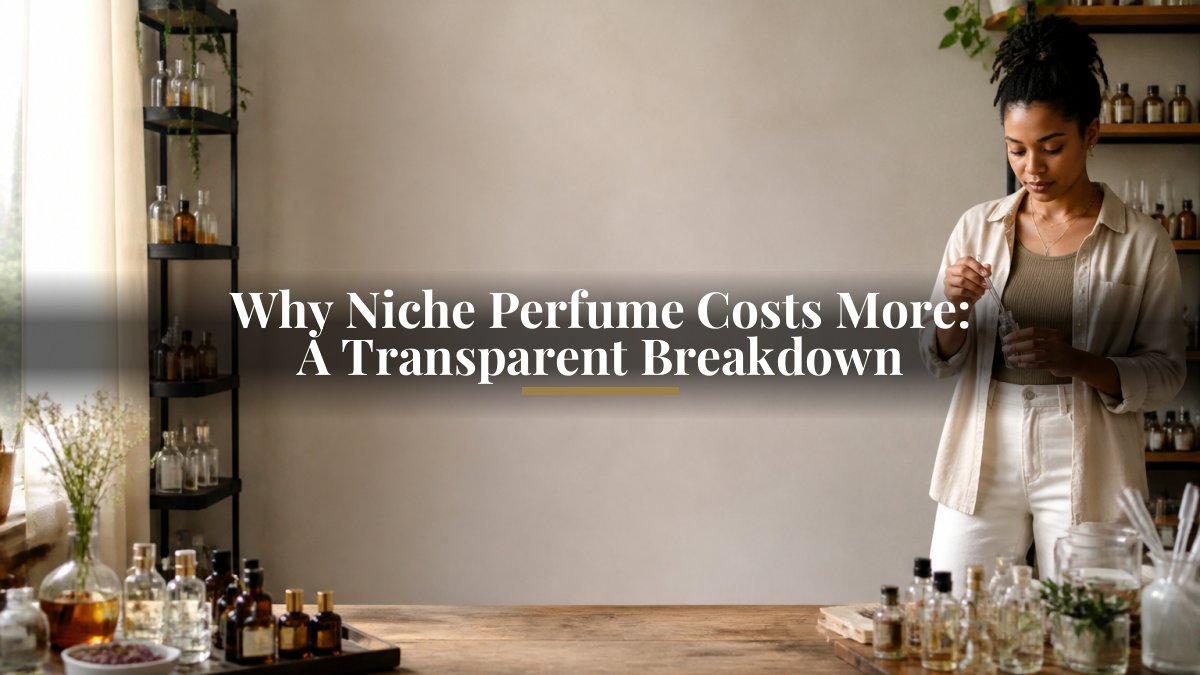
Why Niche Perfume Costs More: A Transparent Breakdown
Table of Contents
- The Real Cost Behind Niche Perfume Pricing
- Premium Ingredients and Ingredient Sourcing
- Niche Perfume vs Designer Perfume: Where the Price Difference Comes From
- Perfumer Expertise and Fragrance Development
- Small-Batch Production and Manufacturing Scale
- What Makes Perfume Expensive: Exclusivity, Packaging, and Brand Story
- Are Niche Perfumes Worth It? Evaluating Value and Niche Perfume Longevity
- How to Judge Whether a Niche Fragrance Justifies Its Price
- Frequently Asked Questions
Last Updated: October 19, 2026
The Real Cost Behind Niche Perfume Pricing
When you shop for niche perfume, the price tag often surprises you. A bottle costs two, three, sometimes five times more than what you'd pay at a department store. The question isn't whether niche perfume costs more, it clearly does. The real question is why, and whether that premium actually makes sense.
We understand the frustration. At Atlanta Signature Fragrance Collection, we understand the frustration. Fragrance enthusiasts often ask what justifies the cost. The answer isn't simple, but it's worth understanding. It comes down to ingredients, craftsmanship, production methods, and business model, not just marketing hype.
The difference between niche perfume and mass-market fragrance runs deeper than bottle design or brand name. It touches everything from how raw materials are sourced to how many people actually craft each scent. Understanding these factors helps you decide whether niche fragrance is worth it for you.
Premium Ingredients and Ingredient Sourcing
Niche perfume costs more because it uses better ingredients. This isn't marketing language, it's a fundamental difference in material quality.
Mass-market fragrances rely heavily on synthetic molecules. These are cheaper, consistent, and predictable. A niche perfumer, by contrast, sources natural essences and rare raw materials. Think oud from Cambodia, iris root from Italy, or ambroxan synthesized to mimic natural amber.

Natural ingredient sourcing adds complexity. A perfumer doesn't just buy jasmine, they source Grasse jasmine absolute, or Egyptian jasmine, or Sambac jasmine from India. Each has a different scent profile and price point. Sourcing these materials requires relationships with suppliers, quality testing, and sometimes long-term contracts.
Rare ingredients drive costs up even more. Oud, for example, comes from infected agarwood trees. It's expensive, inconsistent, and heavily regulated. A niche fragrance might use genuine oud; a designer fragrance might use an oud-like synthetic.
Ingredient concentration matters too. Niche fragrances often contain higher percentages of fragrance oils relative to alcohol and water. More scent material means higher ingredient costs and better longevity on skin.
Niche Perfume vs Designer Perfume: Where the Price Difference Comes From
The gap between niche perfume and designer perfume isn't just about ingredients. It's about how the business operates.
Designer perfumes are made by large corporations. They have massive marketing budgets, global distribution networks, and economies of scale. A single fragrance might sell millions of bottles.
Niche perfume operates differently. Production runs are smaller. A niche brand might make 5,000 bottles of a fragrance; a designer brand makes 500,000. That means niche perfumers cannot negotiate the same bulk discounts on bottles, caps, or even raw materials.
Distribution adds to the difference. Designer fragrances are in every department store, every airport, every major retailer worldwide. Niche fragrances are sold through independent retailers, specialty shops, and direct-to-consumer channels. Each channel has different margins and logistics costs.
Marketing budgets tell the story clearly. A designer fragrance spends millions on celebrity endorsements, magazine ads, and retail placement. A niche brand spends far less on paid advertising. Instead, they rely on word-of-mouth, fragrance communities, and editorial coverage.
The real difference: designer perfumes charge a premium for the brand name and distribution. Niche perfumes charge a premium for ingredients and craftsmanship. Which premium makes more sense depends on what you value.
Perfumer Expertise and Fragrance Development
You're not just paying for ingredients when you buy niche perfume. You're paying for the person who created it.
A niche perfumer is often an artist with years of training. Many study at fragrance schools in France, the United States, or other centers of perfumery. They learn to identify hundreds of scent notes, understand how molecules interact, and balance competing aromatic elements. This expertise takes time to develop and commands a price.
Fragrance development in niche houses is hands-on. A perfumer might spend months creating a single fragrance. They test formulations, adjust ratios, evaluate how the scent evolves on skin over hours. They consider how it interacts with different skin chemistry. This iterative process costs time and materials.
Scents of Atlanta Collection →
Large companies use similar processes, but they amortize those costs across millions of bottles. A niche brand spreads the same development cost across thousands. That's a significant difference per unit.
Some niche perfumers are known names in fragrance communities. They have signature styles and loyal followings. Buying a fragrance by a renowned perfumer carries a premium similar to buying art by a known artist. You're paying for their reputation and vision, not just the liquid in the bottle.
Small-Batch Production and Manufacturing Scale
Scale matters enormously in fragrance manufacturing. Small-batch production is expensive.
A niche perfume house might produce 500 to 5,000 bottles per fragrance per year. A designer brand produces hundreds of thousands. When you're making 500 bottles, your cost per unit for production, quality control, and packaging is much higher than when you're making 500,000.
Small-batch production also means less flexibility with suppliers. A large company can negotiate contracts for raw materials at bulk rates. A small producer pays spot prices or works with specialty suppliers who charge premiums for smaller quantities.
Manufacturing facilities differ too. Niche brands often use smaller, specialized facilities or even produce in-house. These operations have higher labor costs per unit. Mass-market production uses enormous facilities optimized for volume and efficiency.
Quality control in small-batch production is typically more rigorous. Each batch gets tested individually. Larger operations use statistical sampling. More testing means higher costs.
There's also less waste in small-batch production, which might sound like a cost savings. But actually, smaller runs mean less ability to optimize manufacturing efficiency. Larger batches allow for better process efficiency and lower per-unit waste.
What Makes Perfume Expensive: Exclusivity, Packaging, and Brand Story
Beyond ingredients and production, three factors drive niche perfume pricing: exclusivity, packaging, and narrative.
Exclusivity is real. A niche fragrance might be made in limited quantities. Some brands intentionally limit production to maintain scarcity and desirability. Others simply cannot produce more because they're constrained by ingredient availability or production capacity. This scarcity supports higher prices.
Packaging in niche fragrances is often more elaborate. Glass bottles are thicker and heavier. Caps are made from quality materials like wood or metal. Boxes are printed on specialty paper with custom designs. A designer fragrance might spend a few dollars on packaging; a niche fragrance might spend five to ten times that.
Brand story matters in niche fragrance in ways it doesn't for mass-market brands. A niche perfume house often has a specific origin story, philosophy, or creative vision. The brand tells you why the fragrance exists, what inspired it, and what makes it different. Consumers pay for that narrative. It's part of what justifies the price.
At Atlanta Signature Fragrance Collection, we embed our story into every fragrance. Each scent reflects the character of Atlanta, its history, its energy, its unique spirit. That story is part of what you're buying. It's not separate from the fragrance; it's integral to the experience.
Are Niche Perfumes Worth It? Evaluating Value and Niche Perfume Longevity
Whether niche perfume justifies its price depends on how you measure value.
If you measure value purely by cost per milliliter, niche fragrances rarely win. A designer fragrance might cost $1.50 per milliliter; a niche fragrance might cost $3 or $4. By that metric, the designer fragrance is cheaper.
But cost per milliliter ignores longevity. Niche perfumes often have higher fragrance concentrations. A niche fragrance with 20% fragrance oils lasts longer on skin than a designer fragrance with 15% oils.
Consider cost per wear. If a niche fragrance costs $150 for 50 milliliters and you wear it every day, that's roughly $0.12 per wear over a year.
Scents of Atlanta Collection →
Value also depends on your priorities. If you care about ingredient quality, unique scent profiles, and craftsmanship, niche perfume delivers. If you prioritize brand recognition and broad availability, designer fragrances make more sense.
Many fragrance enthusiasts buy both. They use niche fragrances for personal enjoyment and designer fragrances for everyday wear or when they want something readily available.
Niche perfume longevity is often superior. Higher fragrance concentration means the scent stays on your skin longer and projects further. A well-made niche fragrance might last 8-10 hours; many designer fragrances fade after 4-6 hours.
How to Judge Whether a Niche Fragrance Justifies Its Price
Before spending $100 or more on a niche fragrance, ask yourself these questions:
1. Can you sample it first? Never buy niche perfume without smelling it. Many niche brands offer sample sets or discovery sets at lower prices. This lets you test the fragrance on your skin chemistry before committing to a full bottle. Your skin's pH, natural oils, and microbiome affect how a fragrance smells on you. What smells amazing on a test strip might smell different on your skin.
2. What's the fragrance concentration? Check whether it's eau de parfum (15-20% fragrance oils), eau de toilette (5-15%), or cologne (2-5%). Higher concentration means longer wear and better value per wear.
3. How long does it last? Read reviews from people with similar skin types to yours. How many hours does the fragrance stay noticeable?
4. What are you paying for specifically? Break down the price. Are you paying for rare ingredients? Renowned perfumer? Limited production? Elaborate packaging? Understand where your money goes.
5. Will you actually wear it regularly? A fragrance only has value if you use it. If it's so expensive that you save it for special occasions, it's not a good investment.
6. Does it fit your lifestyle? Some niche fragrances are bold and unconventional. They might not work in conservative professional settings. Others are subtle and intimate.
A practical way to evaluate niche perfume is to calculate cost per wear over one year. Divide the price by the number of days you'll wear it.
| Evaluation Factor | What to Look For | Why It Matters |
|---|---|---|
| Fragrance concentration | Eau de Parfum (15-20%) vs Eau de Toilette (5-15%) | Higher concentration = longer wear = better value |
| Longevity | 6+ hours on skin | Justifies premium pricing vs designer fragrances |
| Ingredient sourcing | Natural essences, rare materials listed | Explains cost difference from synthetic alternatives |
| Perfumer reputation | Known names in fragrance communities | Indicates expertise and creative vision |
| Production scale | Limited batches vs mass production | Affects per-unit costs and exclusivity |
| Cost per wear | Price ÷ estimated annual wears | Shows true value relative to your usage |
Niche perfume costs more because it's made differently. Better ingredients, smaller batches, expert craftsmanship, and careful sourcing all add up.
At Atlanta Signature Fragrance Collection, we believe the investment makes sense when you find a fragrance that truly resonates with you.
Frequently Asked Questions
Why does niche perfume cost more than designer perfume?
Niche perfume typically costs more because it uses higher concentrations of premium ingredients, smaller production batches, and independent perfumers who invest heavily in fragrance development and research. Designer perfume spreads costs across mass production and larger marketing budgets, lowering the per-unit price. Niche brands also prioritize ingredient sourcing and craftsmanship over volume, which increases production costs. The exclusivity and limited availability of niche fragrances also support higher retail prices.
Are niche perfumes worth the extra cost compared to designer options?
Whether niche perfumes are worth it depends on your priorities. If longevity, ingredient quality, and originality matter to you, niche perfumes often deliver better performance and uniqueness. Niche perfume longevity typically exceeds mass-market fragrances due to higher fragrance concentration and premium raw materials. However, if you prefer familiar scent profiles and lower prices, designer perfume may be sufficient. Calculate cost per wear by dividing the price by expected wears, niche fragrances often cost less per wear due to superior longevity and sillage.
What is the difference between niche and designer perfume pricing?
Designer perfume prices reflect mass production economies, celebrity endorsements, and extensive advertising budgets. Niche perfume pricing reflects smaller production runs, premium ingredient sourcing, independent perfumer expertise, and limited distribution. Niche brands invest more per bottle in raw materials and craftsmanship, while designer brands invest more in marketing visibility. This means designer perfume often costs less upfront, but niche perfume may offer better value through superior performance and longevity over time.
How can you tell if a niche fragrance is worth its price?
Evaluate niche perfumes by checking fragrance concentration (eau de parfum or parfum indicates higher quality), reading reviews about longevity and sillage, researching the perfumer's background and craftsmanship reputation, and assessing ingredient transparency. Compare cost per milliliter and cost per wear rather than sticker price alone. Sample before committing to a full bottle, and research the brand's production methods and ingredient sourcing practices. Genuine niche perfumes justify premium pricing through measurable performance, ingredient quality, and originality, not just branding.